
Crossing the 3,000-Citation Milestone on Google Scholar: When Collaboration Meets Momentum
Reaching 3,000 Google Scholar citations in August 2025, I reflect on influential publications, international collaborations, and my growing research journey.
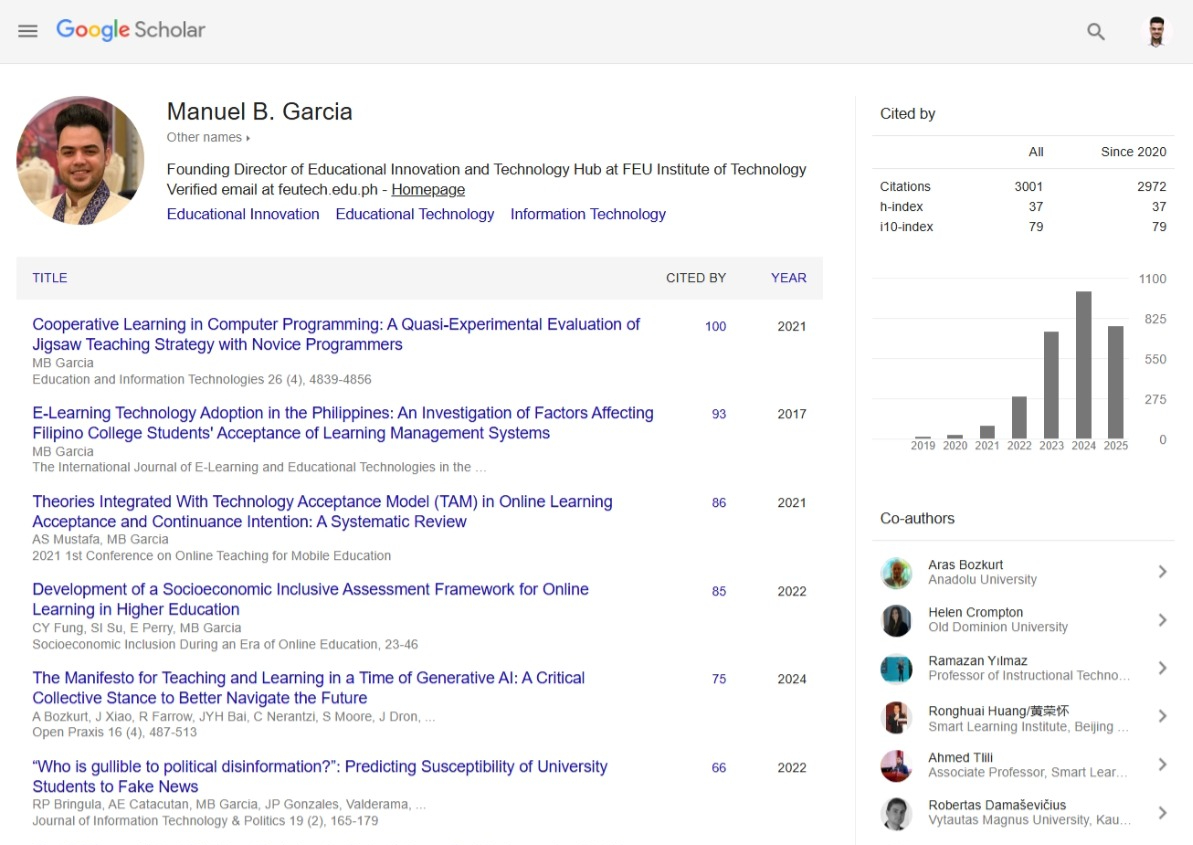
Some people count sheep to fall asleep. I, apparently, count citations. And on August 11, 2025, that little tally officially rolled over to 3,000 citations on Google Scholar!
If you had told me a few years ago that I would go from 2,000 to 3,000 citations in less than a year, I probably would have laughed and said, "Sure... right after I invent a time machine."
Yet here we are. No time machine, just a growing body of research and an academic community generous enough to read, cite, question, and build upon it. After taking approximately six years to reach my first 1,000 citations and just under ten months to reach 2,000, the third thousand arrived in another 11 months and 16 days.
Of course, this milestone is not simply about a number. It reflects the scholarly conversations, collaborations, and research questions that have shaped my work over the years. Every citation represents another occasion when a published study becomes part of someone else's research, whether as supporting evidence, a methodological reference, or even a point of disagreement.
And that is the kind of scholarly engagement that makes the late nights, endless revisions, and occasional existential research crises a little more worthwhile.
Papers That Packed a Punch
Some papers just have that spark, the kind that attracts scholarly attention faster than you initially expected.
One standout is The Manifesto for Teaching and Learning in a Time of Generative AI: A Critical Collective Stance to Better Navigate the Future, published in December 2024.
In approximately eight months, it had already accumulated 75 citations. Not bad for a collaborative effort involving 47 authors from 41 institutions across 20 countries. If there were ever a guide titled "How to Write a Paper with a Global Brain Trust," this would probably be Exhibit A.
Beyond its citation performance, what makes this publication particularly meaningful is the collective effort behind it. Bringing together perspectives from different countries, institutions, and educational contexts is rarely straightforward, especially when the subject is as rapidly evolving as generative artificial intelligence in education.
Then there is my 2021 paper, Cooperative Learning in Computer Programming: A Quasi-Experimental Evaluation of Jigsaw Teaching Strategy with Novice Programmers.
This one had just reached 100 citations, making it my most-cited publication at the time. It feels a little like watching one of your older children graduate and finally get a job.
What I appreciate about this particular study is that it addresses a practical educational challenge: how to support novice programmers through cooperative learning. Its continued citation growth suggests that the questions it examines remain relevant to researchers interested in programming education and instructional strategies.
These two publications also illustrate something I have come to appreciate about research. Some studies gain attention because they address emerging issues, while others continue attracting interest because the educational problems they investigate remain relevant over time.
The Journey So Far
Since reaching my first 1,000 citations in November 2023, I have been documenting my Google Scholar milestones to preserve a historical record of how my research indicators have changed. With the third thousand now reached, the progression is becoming particularly interesting.
| Google Scholar Metrics | 1,000 | 2,000 | 3,000 |
|---|---|---|---|
| Publications | 69 | 89 | 120 |
| Citations | 1,001 | 2,001 | 3,001 |
| h-index | 19 | 32 | 37 |
| i10-index | 44 | 64 | 79 |
| Date | November 2, 2023 | August 26, 2024 | August 11, 2025 |
Note: The figures reflect historical Google Scholar screenshots recorded at each milestone, rather than current citation metrics. Dates correspond to the documented milestone announcements. Click the citation milestone headings to read their corresponding articles.
Looking at this progression, the first thousand remains the longest journey, taking approximately six years from my first research publication in 2017. The second thousand arrived just nine months and 24 days later, followed by another thousand in 11 months and 16 days.
Interestingly, the third thousand took slightly longer than the second. Apparently, even citation growth does not believe in maintaining a perfectly upward trajectory. Still, reaching 3,000 citations less than two years after the first thousand is something I would not have imagined when I started publishing research.
My h-index has also increased from 19 to 37, while my i10-index has risen from 44 to 79 across these milestones. These changes suggest that scholarly attention has extended across a growing number of publications rather than being concentrated exclusively in a single highly cited paper.
Of course, citation indicators have their limitations. They are influenced by publication age, research field, collaboration patterns, and the visibility of particular topics. They do not independently establish the quality or societal impact of research. Nevertheless, keeping this historical record helps me appreciate how my research profile has developed over time.
Momentum, Collaboration, and a Dash of Humor
The first 1,000 citations took years. The second thousand came considerably faster. And now, the third thousand has arrived before I have completely recovered from celebrating the previous milestone.
But behind these numbers is not magic. It is the continuing effort to investigate worthwhile questions, publish research, engage with emerging issues, and collaborate with people who bring different perspectives and expertise to the table.
Research can sometimes feel solitary, especially when you are staring at a manuscript that has already undergone more revisions than you can count. Yet milestones like this remind me that scholarly work is often a collective undertaking.
Co-authors, reviewers, readers, students, and even the occasional critic have all contributed, directly or indirectly, to the development of my research. Some have helped strengthen the methodology, others have challenged my interpretations, and many have introduced ideas that I might never have considered independently.
And if I have learned anything along the way, it is this: take your research seriously, but do not take yourself too seriously.
Academic research is a long game, and it helps to enjoy the process, even when Reviewer 2 has other plans.
Open Invitation: Let's Work Together
If you have ever thought, "Hmm, I would like to work on something interesting, meaningful, and perhaps a little unconventional," then consider this your official invitation.
I remain open to research collaborations, whether you are across the hall, across the country, or on the other side of the world. Some of my most rewarding research experiences have come from working with colleagues whose perspectives differ from my own.
To illustrate how collaboration has shaped my research portfolio, here is a snapshot of my publication and citation distribution by authorship position at this milestone:
- Solo Author – 29 papers (24%) | 842 citations | Avg: 29 citations/paper
- First Author – 42 papers (35%) | 948 citations | Avg: 23 citations/paper
- Co-Author – 18 papers (15%) | 466 citations | Avg: 26 citations/paper
- Last Author – 31 papers (26%) | 744 citations | Avg: 24 citations/paper
These figures reflect different ways I have participated in research, from independently authored studies to collaborative projects involving colleagues from different institutions and disciplines. Authorship position does not necessarily capture the full extent of an individual's contribution, but it offers another perspective on the range of research activities behind these citation milestones.
In short, whether I am leading a project, contributing as a co-author, or working with a larger international team, I continue to value the opportunities that collaboration creates.
And if you have an interesting research question in mind, I would be happy to explore the possibility of working together. Preferably on a project that does not require 47 authors to agree on a single sentence, although I am clearly willing to make exceptions.
Onward to the Next Chapter
So, what comes next?
Well, I am not setting my sights on 4,000 citations just yet, mostly because I do not want to start refreshing Google Scholar every morning as though it were a stock market application.
The real goal remains to produce research that contributes to knowledge, addresses meaningful problems, and encourages further scholarly inquiry. Citation milestones are welcome reminders that published work continues to circulate, but they are not the only indicators of whether that work matters.
I am grateful to everyone who has been part of this journey, whether you have collaborated with me, cited my publications, offered constructive criticism, or simply taken the time to read something I have written.
And to those who read one of my papers before deciding it was "interesting, but not quite what I was looking for," thank you as well. At least we both gave it a chance!
Here is to the next research question, the next collaboration, and whatever interesting discoveries lie ahead.
May the research remain meaningful, the reviewers remain constructive, and the citations continue arriving at their own mysterious pace.
Feel free to explore my research papers through my publications page or visit my Google Scholar profile to see the work behind these milestones and my latest citation indicators.