Timeless Questions, Timely Moments: What My Most-Cited Papers Taught Me About Timing in Research
Using the story of two papers published years apart, I reflected how patience and urgency together shape academic influence.
A personal reflection on research impact, citation growth, and the delicate balance between timeless research and timely scholarship.
One of the quieter lessons academic life teaches us is that research does not exist in a vacuum. Papers do not float freely, waiting to be judgedsolely on rigor, theory, or method. They live in time. They move through contexts, conversations, and moments when the world is either ready,or not yet prepared, to listen.
I was reminded of this recently when one of my papers surpassed another in citations. Not because of competition or metrics, but because of what that shift revealed about how research impact actually unfolds. It made me revisit a question many of us ask, sometimes quietly and sometimes anxiously: How do we balance timeless research with timely scholarship?
This post is a reflection on two papers, published three years apart, and what they taught me about patience, urgency,and the responsibilities that come with writing while the world is paying attention.
The Slow Growth of Timeless Research
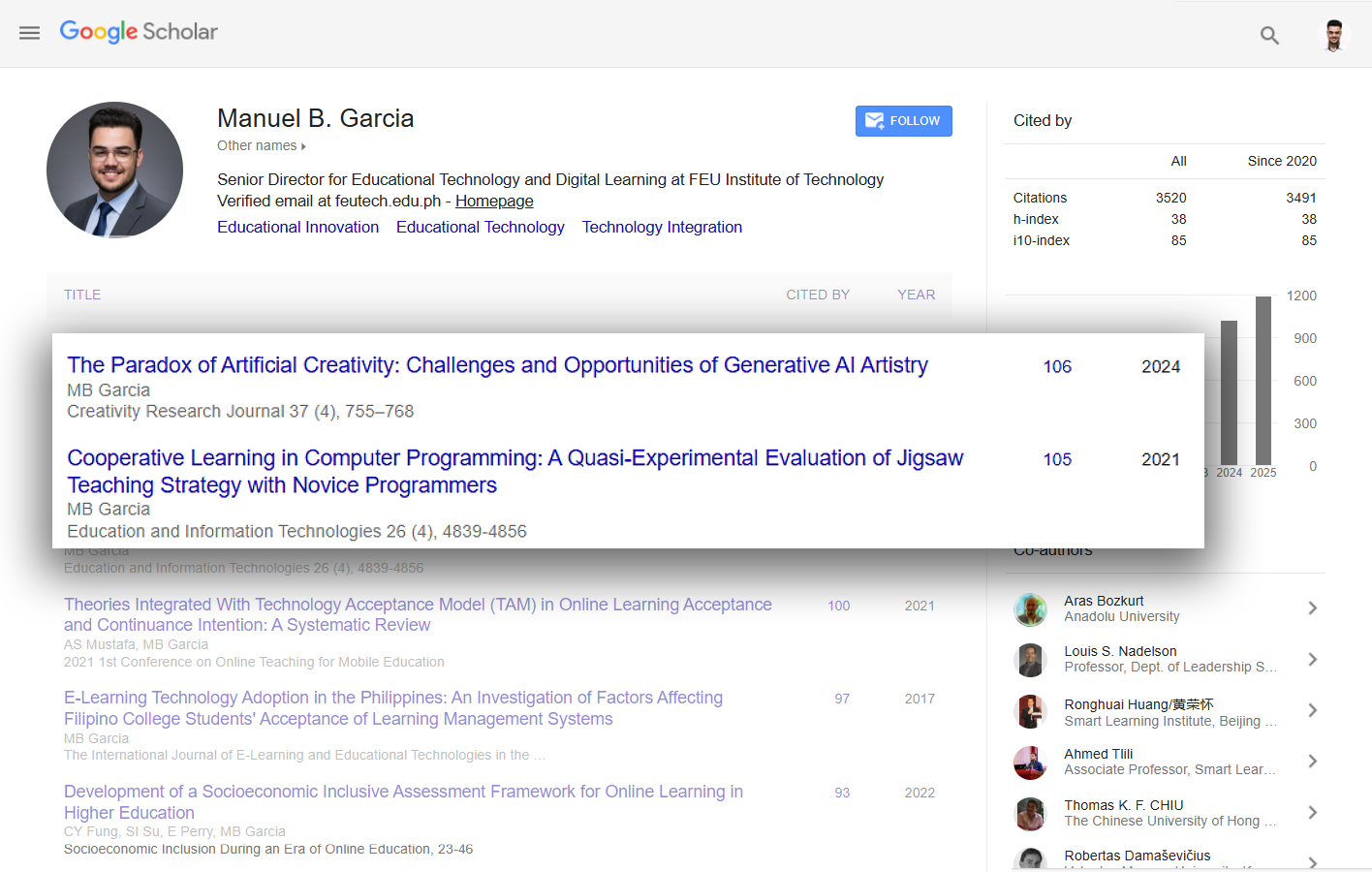
In 2021, I published "Cooperative Learning in Computer Programming: A Quasi-Experimental Evaluation of Jigsaw Teaching Strategy with Novice Programmers." Like many education studies, it did not become highly cited overnight.
Instead, it grew steadily and quietly. It found its audience the way a lot of educational research does:through classroom conversations, reading lists, course syllabi, and researchers who value careful design and grounded pedagogy.Over time, it accumulated citations until it became my most-cited paper.
What that kind of trajectory represents to me is not just "success." It represents endurance. It suggests the paper is addressing a problem that persists across cohorts, institutions, and curricular revisions.It is research that continues to be useful even as specific technologies and buzzwords change.
This is the kind of impact that can be easy to underestimate, especially in a culture that celebrates fast results.But slow influence has its own legitimacy. Some work is not meant to trend. It is meant to last.
When a Question Becomes Unavoidable
In 2024, I published a very different kind of paper: "The Paradox of Artificial Creativity: Challenges and Opportunities of Generative AI Artistry."
This paper was shaped by a question that suddenly felt unavoidable across disciplines.Not because it was fashionable, but because it was already spilling into real life: classrooms, creative industries, policymaking conversations, and everyday choices.
The questions were no longer hypothetical. They were immediate. What does creativity mean when machines can generate art?What do we gain? What do we lose? What do we need to rethink?
Unlike timeless questions that remain steady over decades, timely questions arrive with urgency. They demand scholarly engagement while uncertainty is still present, when definitions are still evolving,and when the "right" stance is not yet socially agreed upon.In moments like these, research is not only descriptive. It can be clarifying.It can name what people are feeling but have not yet articulated.
In other words, the paper entered a conversation already in motion, and it had the opportunity to contribute while the story was still being written.
The Shift in 2025: A Quiet Reminder About Timing
By 2025, something interesting happened. The 2024 paper surpassed my 2021 paper in citations.
I do not interpret that as a competition, nor as a ranking of intellectual value. I see it as a reminder that timing is not a superficial detail. Timing is part of the ecosystem that determines whether research is noticed,shared, debated, applied, and built upon.
A paper can be rigorous and still move slowly if it enters a field when attention is fragmented, or when the problem it addressesis not yet widely recognized as urgent. Conversely, a paper can accelerate quickly when it meets a moment where many people are askingthe same question at once.
This is not a call to chase trends. It is a call to acknowledge that the world outside academia influences the life of a paper more than we sometimes admit.
Research, Urgency, and the World Beyond Academia
We have seen the power of timing before. During COVID, research surged not because scholars suddenly discovered interest in public health,but because the world needed frameworks, evidence, and decision support in real time. COVID-related research mattered because it helped people think, decide, and act while living through uncertainty.
Today, research on artificial intelligence is gaining attention for similar reasons.The conversation is already happening in classrooms, studios, boardrooms, and everyday life. Questions about authorship, creativity, learning, labor, fairness, and ethics are not "future" questions anymore.They are present-tense questions.
In moments like this, scholarship becomes especially meaningful when it helps shape the conversation rather than arriving years later as a reflection.This is one of the strongest arguments for timely scholarship: it allows research to participate in the formation of norms,not only their analysis after the fact.
The Balance: Timely Does Not Mean Shallow, and Timeless Does Not Mean Late
That said, timeliness should never be the number one focus. Rigor, ethics, and meaningful contribution come first.Otherwise, we risk producing work that reacts without reflection, or chases attention without substance.
This is how we end up writing papers with titles like"AI and Literally Everything: A Framework for the Universe"and we all pretend we are fine. ?
The deeper goal is not to pick a side. The balance, I am learning, is not between timeless and timely research, but in holding both at once.It means doing careful, ethical work while being brave enough to engage the questions that matter right now.
Some research is designed to endure. Some research is designed to intervene. The most meaningful scholarship often does both.It draws from timeless theory and method while staying responsive to the evolving realities of society, technology, and education.
A Question Worth Asking
Academic life trains us to ask many kinds of questions. We ask what is novel, what is methodologically sound, what fits the literature,and what can realistically be published. Over time, we also learn to ask strategic questions about journals, audiences, and impact.These questions matter, and they shape the rhythms of academic work.
But there is another question that quietly shapes whether research resonates or fades into the background. It is the question of timing.
Some research questions are timeless. They address enduring challenges in learning, collaboration, equity, cognition, or human behavior.These questions rarely generate immediate attention, but they reward patience. Their influence unfolds gradually as they are tested across contexts,revisited by new generations of scholars, and adapted to changing environments. This kind of research becomes part of the intellectual backbone of a field.
Other questions are timely. They emerge when technologies shift, crises unfold, or long-standing assumptions are disrupted.These questions demand engagement while uncertainty is still present, when answers are incomplete and debates are still forming.Addressing them requires not only rigor, but also intellectual courage. Publishing in these moments means contributing to a conversation that is still alive,rather than commenting on it once conclusions have already been drawn.
The most meaningful scholarship often sits at the intersection of these two. It draws from timeless principles, solid theory, and careful methods,while engaging issues that society is actively trying to understand.
This balance is captured in a simple but demanding idea:
Good research asks meaningful questions. Enduring research asks them carefully. Impactful research asks them when society is ready to listen. - Manuel B. Garcia
Holding these three together is not easy. Asking meaningful questions without care leads to shallow conclusions. Being careful without relevance risks invisibility. Being timely without rigor risks noise. The challenge for researchers is not choosing one over the others, but learning how to carry all three at once.
So the question worth asking goes beyond productivity or publication counts. It asks us to reflect more deeply on our role as scholars.
- What question is your field struggling to make sense of right now?
- Where is there uncertainty that research could help clarify rather than simply observe?
- How can your work engage that moment without sacrificing depth, ethics, or integrity?
These are not questions with quick answers. But they are often the ones that shape not only the impact of a single paper,but the direction of a research career.
Closing: An Invitation to Fellow Researchers
I am not sharing this as a "chase the trend" story or as a reminder to optimize for citations. I am sharing it because it is a reminder that research exists within time, context, and urgency.
So here is my question for fellow researchers: What important question is your field asking right now, and are you brave enough to engage with it while the conversation is still unfolding?
If you are working on something timely, I hope you do it with care. If you are working on something timeless, I hope you give it the patience it deserves.And if you are trying to hold both at once, you are not alone.
Publish with purpose, and let your research meet its moment without losing its soul.