Once Wasn't Enough: World's Top 2% Scientists 2024
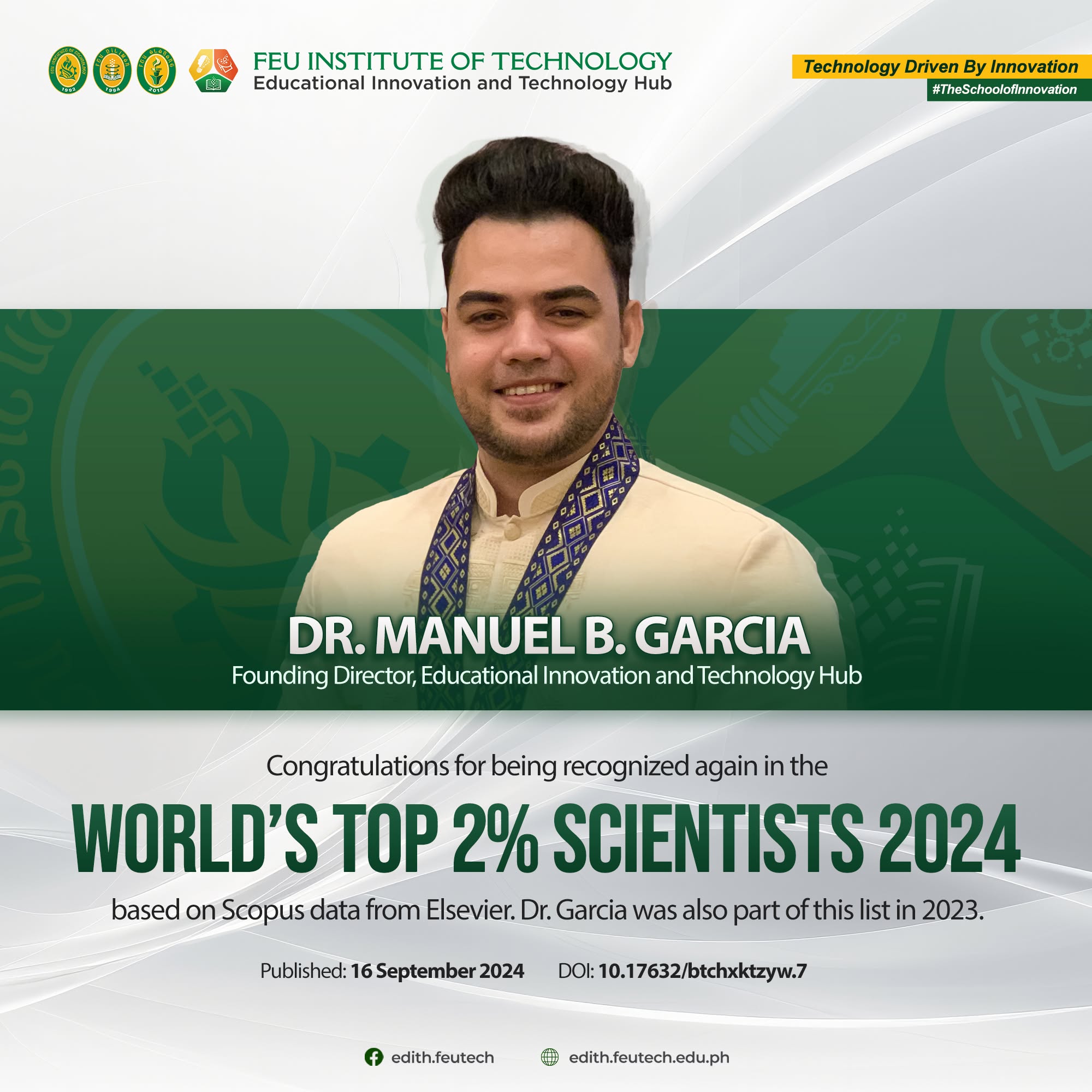
Apparently, once wasn't enough. I made the World's Top 2% Scientists list again in 2024, moving from 24th to 6th nationally and 80,842nd to 19,441st globally.
When I first made the World's Top 2% Scientists list in 2023, I was genuinely surprised. It was one of those academic milestones that you appreciate, celebrate a little, and then return to your usual routine of writing papers, responding to reviewers, and wondering why a manuscript that took six months to write can take another six months to review.
I thought that was it. One appearance, one announcement, and one nice addition to my academic memories.
Apparently, once wasn't enough.
In 2024, I found myself on the list again. And while making it for a second consecutive year was already something worth celebrating, I was particularly surprised when I looked at the numbers. My position had changed quite considerably.
Same List, Different Numbers
For those unfamiliar with the recognition, the World's Top 2% Scientists database, developed by researchers at Stanford University and published through Elsevier, uses standardized citation indicators derived from Scopus to identify researchers with substantial citation impact. It provides separate datasets for single-year and career-long scientific impact.
My inclusion in 2024 was in the single-year category, just as it had been in 2023. But the rankings told a rather different story this time.
The Journey So Far
Since this is my second appearance, I thought it would be interesting to keep track of how the numbers have changed. Perhaps this will become a tradition. Or perhaps I am simply giving myself another spreadsheet to maintain.
| Single-Year Impact | 2023 | 2024 |
|---|---|---|
| National Rank | 24th of 50 | 6th of 58 |
| Global Rank | 80,842 | 19,441 |
| C-Score | 2.61 | 3.06 |
Click the year headings to view my researcher profile and citation indicators for the corresponding edition. National rankings are based on the indicated Philippine researcher populations.
In 2023, I ranked 24th among 50 researchers in the Philippine comparison group and 80,842nd globally. A year later, I moved to 6th among 58 nationally and 19,441st globally. My composite citation score, or c-score, also increased from 2.61 to 3.06.
Of course, I know better than to interpret these numbers as evidence that I somehow became four times better at research in a single year. Citation-based rankings are influenced by several factors, including publication and citation patterns, disciplinary differences, and the composition of the researchers being compared. A higher position does not automatically mean better science.
Still, it is encouraging to see that the research I have contributed to continues to find its way into the work of other scholars. After all, we publish research hoping that someone, somewhere, will find it useful. Preferably someone other than ourselves checking whether the article has finally been indexed.
So, What Does Making the List Again Mean?
I suppose the most meaningful part of this second appearance is not the ranking itself, but the reminder that research can continue to have an influence beyond the moment it is published.
We spend considerable time thinking about what to investigate, how to approach a problem, and whether our findings contribute anything meaningful to the literature. Once a paper is published, however, much of what happens next is beyond our control. Other researchers may read it, question it, build upon it, or occasionally cite it for reasons we never anticipated.
That is one of the interesting things about academic publishing. We can decide what research to conduct, but we cannot decide how the scholarly community will respond to it.
And while citations are imperfect indicators of scholarly contribution, they can offer one perspective on how research circulates within the academic community. I appreciate that perspective, even as I recognize its limitations.
Until the Next List?
I am grateful to the colleagues and collaborators who have been part of my research journey, as well as the researchers who have engaged with our published work. Recognition like this may appear under an individual name, but research rarely happens in isolation.
When I wrote about my first inclusion in 2023, I had no particular expectation of writing a sequel. Yet here we are, one year later, with another entry.
Will there be a third? I have no idea. Academic rankings are not exactly something one can schedule in a research calendar.
For now, I am simply happy to be included again. And if this does become an annual tradition, at least I already have a title for the next installment.
One appearance was a pleasant surprise. Two appearances? Apparently, the first one wasn't a typo.
About the Ranking and the Data
The 2024 World's Top 2% Scientists database is based on the August 2024 update of the science-wide author databases of standardized citation indicators, published by Elsevier on September 16, 2024. This edition uses a Scopus snapshot from August 1, 2024, with citation indicators updated through the end of 2023.
Explore the World's Top 2% Scientists Database
Curious about the rankings? I developed an independent World's Top 2% Scientists website where you can explore researcher profiles without navigating the original spreadsheets.
Explore the DatabaseThis is an independent data exploration resource and is not an official ranking platform operated or endorsed by Stanford University or Elsevier.