
Crossing the 1000-Citation Milestone on Google Scholar: The First Thousand Is the Hardest
From my first publication in 2017 to 1,000 Google Scholar citations in 2023, I reflect on six years of research, persistence, and lessons learned.
Six years, one thousand citations, and more manuscript revisions than I care to remember. On November 2, 2023, I shared a milestone that once seemed rather distant: my Google Scholar profile had officially surpassed 1,000 citations!
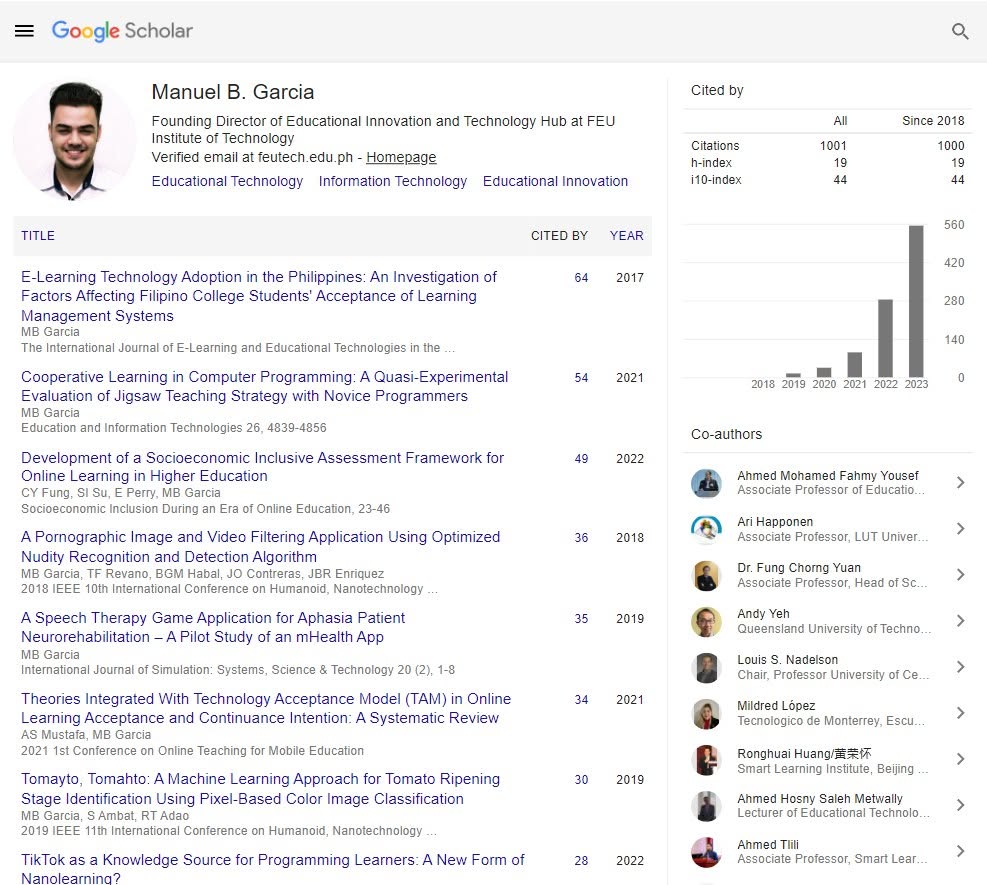
My first research publication appeared in 2017, and back then, reaching a thousand citations was not even something I had seriously considered. I was simply trying to publish my first paper. Fast forward approximately six years, and my published work had accumulated 1,001 citations, an h-index of 19, and an i10-index of 44. It may not have happened overnight, but then again, very little in academic publishing does.
Although I am documenting this milestone retrospectively, I wanted to give the first thousand its own place in my research journey. After all, every subsequent milestone has to start somewhere, and this one took quite a while to arrive.
It All Started With One Paper
When I began my research journey in 2017, my ambition was remarkably simple: publish one paper in a journal. Just one. I wanted to experience the process of conducting research, writing a manuscript, and eventually seeing my work become part of the scholarly literature.
At the time, that single publication already felt like a significant achievement. There was so much to learn, from developing research questions and selecting appropriate methodologies to interpreting findings and responding to reviewers. I quickly discovered that writing a research paper and getting it published were two rather different challenges.
Of course, the publication process came with its share of frustrations. Manuscripts required revisions, editorial decisions took time, and reviewer comments sometimes raised questions I had not anticipated. There were moments when I wondered whether a paper would ever make it past the review process. Apparently, patience is an unofficial prerequisite for becoming a researcher.
But that first publication opened the door to further questions and opportunities. I became increasingly interested in exploring how technology could address educational challenges, improve learning experiences, and contribute to developments in information technology. One study gradually led to another, and what began as an attempt to publish a single paper developed into a continuing commitment to research.
Looking back, I find it interesting that I was initially concerned about whether I could publish at all. I certainly was not thinking about how many times those publications might eventually be cited.
The First Thousand Is the Hardest
There is something particularly memorable about reaching the first thousand citations. Unlike publishing a paper, which has a relatively identifiable endpoint, citations accumulate gradually and often unpredictably. You publish your work, make it available to the academic community, and hope that someone, somewhere, might find it useful.
Sometimes, that attention comes quickly. Other times, it takes years. And occasionally, you find yourself checking Google Scholar just to discover that the citation count has increased by one. Naturally, that one citation still counts as progress!
From my first publication in 2017 to November 2023, it took approximately six years for my Google Scholar profile to reach 1,000 citations. During that period, I continued exploring research questions, publishing studies, learning from collaborators, and developing my interests in educational technology and related fields.
What made this milestone meaningful was not simply the four-digit number. It was the realization that my work had become part of other researchers' scholarly conversations. Some publications had been cited in studies examining similar questions, while others had provided references for subsequent investigations. Knowing that my research had found a place in the literature was encouraging, particularly when I remembered how uncertain the journey had seemed at the beginning.
Still, I would hesitate to suggest that the first thousand is necessarily the hardest for every researcher. Citation trajectories differ considerably across disciplines, publication practices, and individual research careers. In my case, however, the first thousand certainly required the longest wait up to that point. Hence, the title of this article.
The Journey So Far
To preserve a record of this milestone, I have decided to document my Google Scholar indicators at each major citation threshold. This first entry marks the beginning of that historical record, which will gradually expand as subsequent milestones are reached.
| Google Scholar Metrics | 1,000 |
|---|---|
| Publications | 69 |
| Citations | 1,001 |
| h-index | 19 |
| i10-index | 44 |
| Date | November 2, 2023 |
Note: The figures reflect my historical Google Scholar screenshot rather than current citation metrics. The date corresponds to my documented milestone announcement. Click the citation milestone heading to access its corresponding article.
From my first research publication in 2017 to this milestone in November 2023, the journey took approximately six years. During that time, my research profile developed to include 1,001 citations, an h-index of 19, and an i10-index of 44. These indicators provide a useful historical snapshot of my scholarly work at that particular stage of my career.
Of course, citation metrics do not tell the entire story. They reflect particular aspects of scholarly attention and publication performance, but they cannot independently determine the quality, originality, or practical significance of research. Nevertheless, I appreciate having these figures documented because they allow me to look back and see how my research journey has progressed.
Beyond the Numbers
While reaching 1,000 citations is personally rewarding, I believe that the value of research extends far beyond how frequently a publication appears in someone else's reference list.
In educational technology, for instance, research may contribute to improving teaching practices, informing educational policies, developing learning technologies, or helping institutions respond to emerging challenges. These contributions may be difficult to capture through citation indicators alone, yet they remain important reasons for conducting research in the first place.
At the same time, citations represent one way that scholarly ideas travel beyond their original publications. A researcher may use a finding to support a new investigation, apply an existing framework in a different context, or challenge an earlier conclusion. Even critical citations can contribute to the development of knowledge, which is precisely why research should remain open to examination and discussion.
For me, this milestone serves as a reminder that publishing a paper is not necessarily the end of its contribution. Sometimes, the more interesting part begins when other researchers encounter the work and decide what to do with it.
I also hope this experience offers some encouragement to aspiring researchers who are still working toward their first publication or wondering whether their studies will ever receive scholarly attention. Research careers develop at different rates, and the absence of immediate recognition does not necessarily diminish the value of a contribution. What matters is continuing to ask worthwhile questions, maintaining research integrity, and producing work that may be useful to others.
Here's to the Next Thousand
When I published my first paper in 2017, I would have been delighted simply to know that someone had read it. Six years later, seeing my Google Scholar profile cross the 1,000-citation mark felt like a meaningful reminder of how far that initial ambition had developed.
I remain grateful to the colleagues, collaborators, mentors, and fellow researchers who have contributed to this journey. Research may sometimes feel like an individual undertaking, particularly during those long hours spent writing and revising manuscripts, but meaningful scholarly work often develops through the exchange of ideas and the support of others.
Moving forward, I hope to continue exploring research questions that contribute to knowledge and address practical challenges, particularly in education and technology. Citation milestones are encouraging, but they are not the reason I began conducting research, and I hope they never become the only reason to continue.
As for the next thousand citations, I have no idea how long they will take. If the first thousand required approximately six years, perhaps the second will arrive a little sooner.
Then again, this is academic research. Even predicting when a manuscript will be accepted is difficult enough!
Feel free to explore my research papers through my publications page or visit my Google Scholar profile to see the work behind this milestone and my latest citation indicators.